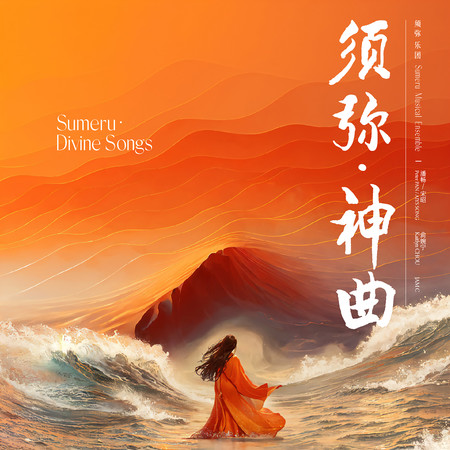
須彌·神曲(Sumeru·Divine Songs)
須彌樂團
2024-08-30 · 華語/流行音樂
遙遠的音符,融入深邃的夜色,如同神秘星辰點綴天空。須彌樂團,名字承載著博大的思維,正如“須彌藏芥子,芥子納須彌”一般,以纖小之物寄寓宇宙之奧秘。在這場音樂的儀式中,他們超越了傳統,超越了樂器的局限,將音符交織成一幅華美的圖景,勾勒出新民樂的瑰麗輪廓。 曲,是音樂的律動,亦是酒令的律動。自古以來,樂曲與酒便是祭祀活動必不可少的元素。在我國古代祭祀典禮中設有樂舞表演和音樂演奏,稱“雅樂”;在祭祀活動中,以酒澆地,表示祭奠,謂之“祭酒”。雅樂悠揚,如同祭祀之歌,而祭酒則是與神明對話的媒介。祭祀活動的對象包括天地、山川等,還有眾多神秘而重要的神話人物。 神話,是先人對自然的思考,是先人天馬行空的想像力、無窮的創造力,是華夏民族燦爛精神文明的見證。在這張名為“神曲”的專輯中,中西樂器共鳴,譜寫出了一幅神秘而豐富的音樂畫卷。主奏樂器大提琴和揚琴,一個源自西方,一個蘊含東方情韻,交織出中西文化的和諧之音。 這張專輯由新銳作曲家JAM C執筆,邀請了揚琴演奏家侴婉寧、大提琴演奏家潘暢、大提琴演奏家宋昭、笛簫演奏家陳冬、琵琶演奏家顧聖嬰、二胡演奏家範曉麗、獨唱演員夏桐等出色的音樂家加盟共同演奏。他們的合奏,宛如酒令之聲,如同祭神的樂章。專輯之“新民樂”不只是民樂與西洋樂器的中西交匯,更首次加入了AI人聲的使用,為新民樂作品的創新再拋一種可能性。 專輯描述上古神話中10位女神人物的故事,由《媧皇創世》拉開序幕,深沉的鼓聲仿佛迎接宇宙的創生,女媧摶黃土做人,是華夏民族的起源,她的形象在音符間得以永存;《日禦》和《月神》兩曲如同日月的迴圈,熱烈而清冷,用音符描繪出天地的壯麗;《女魃》和《天降玄女》則是描述了神話故事中戰爭的激烈與殘酷;《洛神宓妃》、《湘水祭》、《嫘祖始蠶》旋律婉轉纏綿,三位女神不同的美態被淋漓盡致地展現眼前;《九幽神樂》與《昆侖瑤池會》完美地用音樂表達了九幽盛世以及蟠桃盛宴的盛大、祥和以及熱鬧之景。女神們的降臨,如同醇美的美酒,神秘而令人陶醉,她們在音樂中起舞,為整個專輯刻畫出神秘而多彩的神話圖景。 這就是《須彌·神曲》——一場神話與酒文化的盛宴,一次對音樂的探索與創新。在須彌樂團的演奏下,中西樂器相得益彰,酒樂之曲,神曲之禮,交匯成一曲華美的音樂畫卷,娓娓道來古老神話,借酒追溯人類的遠古歷程。 Distant notes blend with the profound night, like mysterious stars adorning the sky. Sumeru Musical Ensemble, carrying a vast mindset in their name, just as “a mustard seed contains Mount Sumeru, and Mount Sumeru fits within a mustard seed”, conveys the cosmic mysteries through humble objects. In this musical ceremony, they transcend tradition and the limitations of instruments, weaving musical notes into a splendid panorama, outlining the magnificent contours of new Chinese music. Music, or melody, is not only the rhythm of music but also the rhythm of drinking games. Since ancient times, music and alcohol have been essential elements of sacrificial activities. Ancient Chinese sacrificial rituals included musical and dance performances, known as “yayue (elegant music)”. During these ceremonies, pouring wine on the ground as an offering was called “sacrificial wine”. Yayue is melodious, like a song for sacrifices, while sacrificial wine serves as a medium for communication with deities. The objects of these rituals include heaven, earth, mountains, rivers, and numerous enigmatic and significant mythological figures. Mythology is the ancestral reflection on nature, it is the boundless imagination and limitless creativity of our ancestors, and it bears witness to the brilliant spiritual civilization of the Chinese nation. In this album titled “Divine Songs” resonating Chinese and western instruments compose a mysterious and rich musical tapestry. The prominent instruments, cello and yangqin, one originating from the West and the other encapsulating eastern charm, intertwine to create harmonious melodies of both Chinese and western cultures. This album is composed by the rising composer JAM C and performed by a stellar lineup of musicians including yangqin player Kaitlyn CHOU, cellist Peter PAN, cellist AIYS SONG, dizi and xiao player Dong CHEN, pipa player Shengying GU, erhu player Clare FAN, and solo vocalist Tiffany XIA. Their performance resembles the sound of drinking games, like chapters of music offered to the immortals. The New Chinese Music the album expresses not only represents the fusion of traditional Chinese music with the western music by both Chinese traditional musical instruments and the western musical instruments, but also incorporates the use of AI vocals for the first time, opening up new possibilities for innovative works of new Chinese music. The album describes the stories of ten goddesses from Chinese ancient mythologies. Opening with “Nuwa, the Empress of Creation of Humanity”, the deep drumbeats seem to welcome the birth of the universe. Nuwa molded humans from yellow clay, representing the origin of the Chinese nation, and her image is immortalized through the notes. The tracks “Sun Goddess” and “Moon Goddess” symbolize the cycle of the sun and moon, passionate yet tranquil, capturing the magnificence of heaven and earth. “Nuba, the Goddess of Drought” and “The Mysterious Maid from Heaven” depict the intensity and cruelty of warfare in mythological stories. The melodies of “Fufei, the Goddess of the Luo River”, “Love Story of the Goddess of the Xiang River”, and “Leizu, the First Empress of Silk” are gentle and lingering, fully showcasing the beauty of the three goddesses. “Sunu, the Goddess of Music” and “The Celestial Gathering at Kunlun’s Jade Pool” perfectly express the grandeur, tranquility, and liveliness of the Nine Hades era and the Peach Banquet. The descent of the goddesses, like fine wine, is mystical and intoxicating, as they dance within the music, painting a vivid picture of mythical splendor throughout the entire album. This is “Sumeru · Divine Songs” - a feast of mythology and wine culture, an exploration and innovation in music. Through the performance of the Sumeru Musical Ensemble, Chinese and Western instruments complement each other, combining music and wine, creating a beautiful musical panorama. It narrates ancient myths, tracing the distant history of humanity through wine. 曲目資訊: 1 媧皇創世(Nuwa, the Empress of the Creation of Humanity) 表演者Performer:須彌樂團Sumeru Musical Ensemble 作曲Composer:JAM C 編曲Arranger:JAM C 大提琴Cello:潘暢Peter PAN 揚琴Dulcimer:侴婉寧Kaitlyn CHOU 打擊樂Percussionist:鄭瑀Yu ZHENG 竹笛Dizi:侯長青Changqing HOU 錄音工程師Recording engineer:李正宙Zhengzhou LI、粱梓沛Zipei LIANG、李巍Wei LI、沈援之Yuanzhi SHEN、袁立軍Lijun YUAN 錄音助理Recording assistant:餘柔璿Rouxuan YU 錄音棚Recording studio:蔔音工作室BO-Audio、中國唱片總公司錄音棚China Record Corporation、解放軍總政歌舞團錄音棚PLA General Political Department Song and Dance Ensemble Studio 身歷聲混音/母帶工程師Stereo Mixing/Master Engineer:JAM C 杜比全景聲混音/母帶工程師DolbyAtmos Mixing/Master Engineer:陳宇鵬JC CHAN 杜比全景聲混音/母帶棚DolbyAtmos Mixing/Master Studio:蔔音工作室BO-Audio 身歷聲/杜比全景聲製作人:JAM C 在遙遠的時空中,那個被歲月輕輕呼喚的名字,素手輕撚,以黃泥塑造了人類璀璨的文明,千古不朽的篇章。 創世女神——女媧,是天地的締造者,是人類雛形的雕塑者。 開篇曲《媧皇創世》如同古老的畫卷,始於那個混沌未開的時刻,仿佛是女媧在鼓聲響起的那一刹塑造了一片寂靜的虛空。厚重的鼓聲和悠揚的大提琴猶如她的雙手,輕輕撫摸著這片未被開啟的時光,演奏出一曲空靈而深遠的樂章。 揚琴音響如畫卷中的色彩,逐漸濃郁,引領我們走入神秘而輝煌的上古神話之境。氣勢磅礴的鼓聲,蒼涼的大提琴旋律,清脆的笛音,和揚琴的激蕩,它們在同一時刻碰撞、融合,描繪了女媧在混沌中塑造世界的神奇畫面,仿佛微觀世界中千變萬化的酒魂之“曲”。 在這美妙的音符中,時間的沙漏被打翻,女媧的神奇之音在歲月的深處迴響。音樂的律動將我們帶回那古老的時光,我們在神話的韻律裏徜徉,感受著那古老的神話傳承。 In a distant space time, that name gently called by the years, with delicate fingers, sculpted the splendid civilization of humanity from yellow clay, an immortal chapter throughout the ages. The Empress of the Creation of Humanity, Nuwa, is the creator of Heaven and Earth, the sculptor of the human form. This opening piece is like an ancient painting, beginning at the moment when chaos had not yet unfolded, as if Nuwa in the moment when the drums sounded, shaped a silent void. The deep drum beats and the melodious cello, like her hands, gently caress this unopened time, playing an ethereal and profound melody. The sounds of the yangqin resonate like colors in a painting, gradually becoming richer, leading us into the mysterious and magnificent realm of ancient mythology. The grandiose drums, the desolate cello melodies, the clear flute notes, and the stirring of the yangqin, they collide and merge at the same moment, depicting the magical scene of Nuwa shaping the world amidst chaos, as if the ever-changing “melody” of the wine souls in the microcosmic world. In these wonderful notes, the hourglass of time is overturned, and the magical sound of Nuwa resonates in the depths of the years. The rhythm of music takes us back to that ancient time, where we linger in the rhythm of mythology, feeling the ancient mythological heritage. 2 月神(Moon Goddess) 表演者Performer:須彌樂團Sumeru Musical Ensemble 作曲Composer:JAM C 編曲Arranger:JAM C 大提琴Cello:潘暢Peter PAN 揚琴Dulcimer:侴婉寧Kaitlyn CHOU 錄音工程師Recording engineer:李貴Gui LI 錄音棚Recording Studio:P1 Studio 身歷聲混音/母帶工程師Stereo Mixing/Master Engineer:JAM C 杜比全景聲混音/母帶工程師DolbyAtmos Mixing/Master Engineer:陳宇鵬JC CHAN 杜比全景聲混音/母帶棚DolbyAtmos Mixing/Master Studio:蔔音工作室BO-Audio 身歷聲/杜比全景聲製作人:JAM C 《山海經·大荒西經》有載:“有女子方浴月。帝夋妻常羲,生月十有二,此始浴之。”月神常羲擔當著調和陰陽的重任,又被稱為“女和月母”。 日落,天色漸暗,大提琴的琴音沉穩而悠長,揚琴的演奏輕盈乾淨,悠遠的笛聲纏繞著揚琴與大提琴,勾勒著暮色下逐漸被點點繁星鋪滿的朦朧夜空。忽而,似一陣勁風的打擊樂和笛音將薄霧吹散,驟然見月神常羲起舞沐月。 皎潔的月光傾瀉而下,常羲烏潤的頭髮光可鑒人,即使身著素服大巾也難掩其冰肌玉骨。她隨樂聲翩躚而舞,各樂器交錯應和,你方唱罷我方登場,一時間樂音四起,旋律的層層遞進將月神之舞烘托至高潮後戛然而止......一聲飄渺的笛音瞬間回歸沉寂,風姿綽約的月神又消失在薄霧間,似香氣優雅的美酒,甘爽味長,遐想聯翩。 Recorded in the book “Classic of Mountains and Seas - Classic of the Great Wilderness - West”: “There is a woman bathing the moon. She is Changxi, the wife of Emperor Jun. She gave birth to twelve moons, and this is when she began bathing them.” The Moon Goddess Changxi bears the important responsibility of harmonizing yin and yang and is also known as the “Moon Mother”. As the sun sets and the sky gradually darkens, the cello produces deep and lingering melodies, while the harp’s performance is light and pure. The distant flute sound intertwines with the harp and cello, creating a distant and enchanting atmosphere in the twilight, as the sky becomes adorned with twinkling stars. Suddenly, like a gust of wind, the percussion instruments and flute notes disperse the thin mist, revealing the Moon Goddess Changxi dancing gracefully under the moonlight, bathing in its glow. The moonlight pours down, pure and radiant. Changxi’s lustrous hair shines brightly, even under her simple attire and large headdress, unable to conceal her exquisite beauty. She dances gracefully to the music, with each instrument harmonizing and taking turns to showcase their melodies. The music swells, building up layer by layer, reaching a crescendo that accentuates the Moon Goddess’s dance, only to come to a sudden stop… A fleeting flute note returns to silence, and the graceful Moon Goddess disappears into the thin mist, like an elegant fragrance of fine wine that lingers, evoking endless imagination. 3 洛神宓妃(Fufei, the Goddess of the Luo River) 表演者Performer:須彌樂團Sumeru Musical Ensemble 作曲Composer:JAM C 編曲Arranger:JAM C 大提琴Cello:潘暢Peter PAN 揚琴Dulcimer:侴婉寧Kaitlyn CHOU 錄音工程師Recording engineer:李正宙Zhengzhou LI、粱梓沛Zipei LIANG 錄音助理Recording assistant:餘柔璿Rouxuan YU 錄音棚Recording studio:蔔音工作室BO-Audio 身歷聲混音/母帶工程師Stereo Mixing/Master Engineer:JAM C 杜比全景聲混音/母帶工程師DolbyAtmos Mixing/Master Engineer:陳宇鵬JC CHAN 杜比全景聲混音/母帶棚DolbyAtmos Mixing/Master Studio:蔔音工作室BO-Audio 身歷聲/杜比全景聲製作人:JAM C 洛水蕩漾,青煙嫋嫋,音符在大提琴的吟唱下,悠揚而低回,遊於清輝明月之下。琴竹的敲擊聲明亮且柔情似水。依稀間見一絕色女子駕輕雲、淩波而來,水波蕩漾的浩渺江面愈顯空曠清新。清風徐徐,衣袂飄飄,那人已立於洛川岸旁——洛神宓妃是也。 古老的記載中,宓妃居於洛川,化身水仙,與眾女仙歡宴於洛水之上。她的身影在琴音中若隱若現,猶如晨曦中的霞光,恍若夜空的明星。《墉城集仙錄》中描述:“翩若驚鴻,婉若遊龍”,宓妃,洛水女神,輕嫋的舞姿似流雲,舒展如畫,乃理想美神的化身。 琴音蕭蕭然,在宓妃的引領下,大提琴低沉的迴響宛如夢中的幻影,舞動在洛水之上。揚琴旋律如行雲流水,將宓妃的婉約之美詮釋得淋漓盡致。閉眼聆聽,仿佛能看到宓妃駕雲而來,婀娜多姿的身影在琴音的映襯下更顯得神秘動人。曲終,琴音久久回蕩於耳邊,腦海中已然刻下嫺靜幽雅、絕塵而出世的洛神模樣。 這是一曲《洛神宓妃》的故事,是宓妃在音律中的舞蹈,是洛水在琴音裏的倩影。隨著音符的躍動,她在洛水畔徐徐起舞,婉若遊龍,將傳奇的神話與音樂完美交融。 The Luo River ripples, with wisps of green smoke floating in the air. The notes, sung by the cello, are melodious and softly resonating, wandering beneath the clear radiance of the moon. The gentle strikes of the zither bamboo produce bright and tender sounds, akin to the flowing water. Amidst it all, a stunning woman can be vaguely seen, gracefully riding on light clouds, gliding over the rippling waves, making the vast expanse of the river appear even more serene and fresh. With a gentle breeze and flowing garments, she stands by the banks of Luo River - it is none other than the Goddess Fufei. In the ancient records, Fufei resided in the Luo River, transforming into a water fairy, and joyfully feasted with numerous female immortals upon the Luo River. In “The Collected Records of Immortals in the Walled City”, it is described: “As graceful as a startled swan, as elegant as a wandering dragon”. Fufei, as the goddess of Luo River, possesses a graceful and ethereal dance, resembling flowing clouds, her supple body unfolding like a painted scroll. She embodies the ideal image of a divine beauty. The melancholic melody played by the cello, with its deep resonance guided by Fufei, becomes like a dreamlike illusion, dancing above the waters of Luo River. The melodies of the yangqin flow smoothly and are pleasing to the ear, perfectly capturing the graceful beauty of Fufei. With closed eyes and attentive ears, one can almost visualize the arrival of the Fufei riding on clouds. Her graceful and enchanting figure takes on an even more mystical and captivating allure amidst the harmonious melodies of the qin. As the music reaches its conclusion, the lingering resonance of the qin echoes in their ears, etching into their consciousness the serene and elegant presence of the ethereal Goddess of the Luo River, untouched by worldly impurities. This is the story of “Goddess of the Luo River, Fufei”, a dance performed by Fufei within the realm of music, and the graceful reflection of the Luo River in the melodies of the qin. As the notes leap and dance, she gracefully moves along the banks of the Luo River, akin to a wandering Chinese dragon, seamlessly blending the legendary myth with the enchantment of music. 4 女魃(Nuba, the Goddess of Drought) 表演者Performer:須彌樂團Sumeru Musical Ensemble 作曲Composer:JAM C 編曲Arranger:JAM C 大提琴Cello:宋昭AIYS SONG 揚琴Dulcimer:侴婉寧Kaitlyn CHOU 大提琴錄音工程師Cello Recording engineer:章謀傑Mo CHANG 大提琴錄音棚Cello Recording Studio:行人錄音棚Proman Studio 揚琴錄音工程師Dulcimer Recoding engineer:李正宙Zhengzhou LI、粱梓沛Zipei LIANG 揚琴錄音助理Dulcimer Recording assistant:餘柔璿Rouxuan YU 揚琴錄音棚Dulcimer Recording Studio:蔔音工作室BO-Audio 身歷聲混音/母帶工程師Stereo Mixing/Master Engineer:JAM C 杜比全景聲混音/母帶工程師DolbyAtmos Mixing/Master Engineer:陳宇鵬JC CHAN 杜比全景聲混音/母帶棚DolbyAtmos Mixing/Master Studio:蔔音工作室BO-Audio 身歷聲/杜比全景聲製作人:JAM C 赤水之北,久旱無雨,乃旱神女魃所居之地,這片土地荒涼無比,仿佛是被歲月遺棄的孤寂之地。《山海經·大荒北經》記載:“有人衣青衣,名曰黃帝女妭......蚩尤請風伯雨師,縱大風雨。黃帝乃下天女曰妭,雨止,遂殺蚩尤。” 在冀州之野上,激戰不斷,雷聲轟鳴,風音呼嘯,肉眼所見之處皆狂風驟雨,民不聊生。正值戰況焦灼之際,一位穿著青衣的女子出現在遠方的地平線。她是黃帝請來的旱神女魃,奉命前來擊退興風作浪的風伯雨師。 大提琴奏出悲壯的旋律,映襯著女魃在風雨中搖曳前進的身影,一片孤寂清冷之感。但隨著空靈的女聲開始厲聲叫喊,這幅滅世之卷仿佛迎來了一縷陽光,女魃開始發揮神力,大提琴和揚琴的音符交織,音樂節奏愈發慷慨激昂,空氣中彌漫著一種緊張的氛圍,仿佛整個世界都在女魃的力量下顫抖。當鼓點戛然而止,女聲再次淩厲地劃破長空,急促的旋律、攝人的音效同時出現,這場女魃與風伯雨師的角力達到了頂峰,被狂風卷起的塵土與樹木驟然停歇墜落,耳旁的呼嘯頃刻間轉為靜謐,前一秒還在傾盆而出的大雨迅速蒸發,在場之人無不被眼前的奇觀所震懾。 隨之而來的便是風伯雨師的潰敗,悠揚的旋律回蕩於天地,吟唱著女魃勝利的讚歌,陽光普照於這方飽經磨難的土地,滋潤著無數頑強的生命。 撥開雲霧見天明,這身著青衣的女子,為華夏大地留下了無盡的新生與希望。 In the north of Chishui, the long drought without rain, is the place where the Drought Goddess Nuba lives, this land is desolate, as if it is a lonely place abandoned by the years. Recorded in the book “Classic of Mountains and Seas - Classic of the Great Wilderness - North”: “There was a person dressed in green robes, known as the Yellow Emperor’s daughter, Nuba. … Chiyou invited Fengbo, the Rain Master, to courageously endure the storm. The Drought Goddess, Nuba, descended to assist the Yellow Emperor and ultimately defeated Chiyou.” In the field of Jizhou, fierce fighting, thunder roar, the wind whistling, the naked eye can see all the wind and rain, the people live in poverty. At the height of the war, a woman in green clothes appeared on the distant horizon. She was the Drought Goddess invited by the Yellow Emperor, and was ordered to repel the wind. Cello plays a solemn and stirring melody, reflecting Nuba’s figure swaying forward in the wind and rain, a lonely and cold feeling. But as the ethereal female voice began to shout sharply, this scroll of destruction seemed to usher in a ray of sunshine, Nuba began to play the power, the cello and yangqin notes interwoven, the rhythm of the music became more passionate, the air filled with a tense atmosphere, as if the whole world trembled under the power of Nuba. When the drums stopped, the female voices again are sharply through the sky, shortness of melody, taken the sound appear at the same time, the battle between Nuba and Fengbo reached the peak, the dust and trees swept up by the strong wind suddenly stopped and fell, the roar beside one’s ears instantly turned into silence, the heavy rain that was pouring out the previous second quickly evaporated, everyone present was intimidated by the spectacle in front of them. Pushing aside the clouds and mist to see the dawn, this woman in green clothes has left endless new life and hope for the land of China. 5 湘水祭(Lover Story of the Goddess of the Xiang River) 表演者Performer:須彌樂團Sumeru Musical Ensemble 作曲Composer:JAM C 編曲Arranger:JAM C 大提琴Cello:潘暢Peter PAN 揚琴Dulcimer:侴婉寧Kaitlyn CHOU 簫Xiao:陳冬Dong CHEN 塤Xun:陳冬Dong CHEN 人聲Voice:夏桐Tiffany XIA 錄音工程師Recording engineer:李正宙Zhengzhou LI、粱梓沛Zipei LIANG 錄音助理Recording assistant:餘柔璿Rouxuan YU 錄音棚Recording studio:蔔音工作室BO-Audio 身歷聲混音/母帶工程師Stereo Mixing /Master Engineer:JAM C 杜比全景聲混音/母帶工程師DolbyAtmos Mixing/Master Engineer:陳宇鵬JC CHAN 杜比全景聲混音/母帶棚DolbyAtmos Mixing/Master Studio:蔔音工作室BO-Audio 身歷聲/杜比全景聲製作人:JAM C 《湘水祭》這首作品的靈感來源於屈原《九歌·湘君》篇,與《九歌·湘夫人》互為姊妹篇。作品以湘夫人的視覺講述她與湘君的故事: “湘君,我與他相逢於湘水之濱,那位聳立在水中沙洲上的湘水之神。我們相互傾慕共守湘水。我們的愛情純真而真摯,承諾至死不渝,如同一幅充滿浪漫色彩的畫卷。 我為湘君傾心而來,懷著對他的深深思念,湍流中搭起桂舟獨航湘水,只為與他相見。 我架桂舟而行,令沅湘風平浪靜,江水緩流,只為湘君歸來時的路途安穩。但年復一年,我不知道還要等待多久。又是一年春了,他會回來嗎?” 曲子由一聲遙遠的鈴響開始,惹人引頸期盼,隨後揚琴、大提琴等器樂陸續加入,旋律戚戚然。揚琴平穩的擊奏正如此時湘夫人內心的平靜,當塤的悲涼音色響起,暫態勾勒出她內心平靜下深藏的不安……深秋的水面,孤寂的沙洲,一個“愁”字不足以形容湘夫人對湘君的思念與哀傷,傾注曲中,心神黯然。 淒美的女聲吟唱貫穿整首曲子,秋風瑟瑟,涼得樹木也不禁輕顫,枯葉隨風飄蕩,孤零零的湘夫人望著又泛起波紋的湘水江面,心中情緒跌宕,歌聲隨之高昂,起伏。湘夫人苦等良久,焦灼、惆悵與埋怨早已在心中揉作一團,歌聲更是如泣如訴,每一次的起承轉合都是對心中憤懣的宣洩。 湘君久而不至,湘夫人孤獨地望著江面,波紋湧動,只得獨飲一壺濁酒,將道不盡的相思訴諸曲中,黯然神傷。 The song “Love Story of the Goddess of the Xiang River” draws its inspiration from Qu Yuan’s poem “Nine Songs: the God of the Xiang River, Xiangjun”, which is a companion piece to “Nine Songs: the Goddess of the Xiang River, Xiangfuren”. The composition visually narrates the story of the Goddess of the Xiang River and the God of the Xiang River from the perspective of Xiangfuren: Xiangjun, I met him on the shore of the Xiang River, the God of the Xiang River, standing on a sandbar in the water. We admired each other and guarded the Xiang River together. Our love is pure and sincere, and we promise to remain steadfast until death, like a romantic painting. I have fallen in love with Xiangjun, with deep longing for him. In the turbulent waters, I set up a boat of laurels to sail alone in the Xiang River, only to meet him. I set sail on a laurel boat, keeping the Xiang River calm and the water flowing slowly, only for the safety of the journey when Xiangjun returns. But year after year, I don’t know how long I have to wait. It’s spring again, will he come back? The piece begins with a distant bell ringing, evoking anticipation, followed by the addition of instrumental music such as the yangqin and cello, with a mournful melody. The smooth playing of the yangqin was just like this, when Xiangfuren’s inner peace was heard. When the melancholic tone of xun sounded, it instantly outlined the deep unease hidden in her inner peace... The water surface of late autumn, the lonely sandbar, a word of “sorrow” was not enough to describe Xiangfuren’s longing and sorrow for Xiangjun. She poured her longing into the music. Her mind was gloomy. A poignant female voice sings throughout the entire piece, the autumn wind rustling, making the trees tremble uncontrollably. The withered leaves drift with the wind, and the lonely Xiangfuren looks at the rippling surface of the Xiang River. Her emotions fluctuate in her heart, and her singing rises and falls with it. Xiangfuren has been waiting for a long time, with anxiety, melancholy, and resentment already mixed together in her heart. Her singing is even more like tears, and every turn of events is an expression of her resentment. Xiangjun was absent for a long time, and Xiangfuren looked lonely at the river, with ripples surging. She could only drink a pot of turbid wine alone, pouring the endless longing into the music, feeling dejected and sad. 6 九幽神樂(Sunu, the Goddess of Music) 表演者Performer:須彌樂團Sumeru Musical Ensemble 作曲Composer:JAM C 編曲Arranger:JAM C 大提琴Cello:宋昭AIYS SONG 揚琴Dulcimer:侴婉寧Kaitlyn CHOU 大提琴錄音工程師Cello Recording engineer:章謀傑Mo CHANG 大提琴錄音棚Cello Recording Studio:行人錄音棚Proman Studio 揚琴錄音工程師Dulcimer Recoding engineer:李正宙Zhengzhou LI、粱梓沛Zipei LIANG 揚琴錄音助理Dulcimer Recording assistant:餘柔璿Rouxuan YU 揚琴錄音棚Dulcimer Recording Studio:蔔音工作室BO-Audio 身歷聲混音/母帶工程師Stereo Mixing/Master Engineer:JAM C 杜比全景聲混音/母帶工程師DolbyAtmos Mixing/Master Engineer:陳宇鵬JC CHAN 杜比全景聲混音/母帶棚DolbyAtmos Mixing/Master Studio:蔔音工作室BO-Audio 身歷聲/杜比全景聲製作人:JAM C 在古老的神話中,有一位令人陶醉的音樂女神——素女。她擅長鼓瑟,常以樂為媒,行善積德,造福生靈萬物,她的音樂如一泓清泉,流淌於大地之上,滋潤一方水土。由此她也成為了中華醫家供奉的醫療女神。 當素女的音樂響起,仿佛時間倒流,將我們帶回古老而神秘的時光。揚琴聲如晨曦的第一縷陽光,輕柔而明亮,喚醒了沉睡中的世界。大提琴的低音婉轉如綿延千裏的靜謐土地,生命正孕育其中。音符在空氣中交織,如同和風吹拂的麥浪,輕柔而悠揚。 當旋律加快,揚琴和大提琴共舞,二者和鳴,仿佛萬物在歡快的節拍中蘇醒。瓊漿飛濺,鼓瑟聲如清泉湧動,神樂之音如潮水般傳遍大地。 這美妙的音樂中,世間的生靈展現出各種姿態。他們歡快、自由,仿佛在古老的九幽盛世中徜徉。整個場景宛如一幅神秘而宏偉的畫卷,勾勒出華夏大地上那段被歲月深深銘刻的古老傳說。 In Chinese ancient mythology, there is a mesmerizing goddess of music - Sunu. She is good at playing the drums and se, often using music as a medium to do good deeds and accumulate virtue, benefiting all living beings. Her music flows like a clear spring on the earth, nourishing the soil and water. As a result, she also became the medical goddess worshipped by Chinese medical practitioners. When the music of Sunu plays, it feels like time goes back, taking us back to ancient and mysterious times. The sound of the yangqin is like the first ray of sunlight in the morning, gentle and bright, awakening the sleeping world. The bass of the cello is as gentle as a peaceful land stretching for thousands of miles, and life is nurturing it. The notes interweave in the air, like gentle and melodious waves of wheat blown by the gentle wind. As the melody quickens, the yangqin and cello dance together, harmonizing as if all things awaken in a joyful rhythm. Jadelike wine splashes, the sound of drums and se surges like a clear spring, and the sound of divine music spreads throughout the earth like a tide. In this wonderful music, creatures in the world exhibit various postures. They are joyful and free, as if wandering in the ancient era. The entire scene is like a mysterious and magnificent painting, outlining the ancient legend deeply engraved by time on the land of China. 7 嫘祖始蠶(Leizu, the First Empress of Silk) 表演者Performer:須彌樂團Sumeru Musical Ensemble 作曲Composer:JAM C 編曲Arranger:JAM C 大提琴Cello:潘暢Peter PAN 揚琴Dulcimer:侴婉寧Kaitlyn CHOU 簫Xiao:陳冬Dong CHEN 錄音工程師Recording engineer:李正宙Zhengzhou LI、粱梓沛Zipei LIANG 錄音助理Recording assistant:餘柔璿Rouxuan YU 錄音棚Recording studio:蔔音工作室BO-Audio 身歷聲混音/母帶工程師Stereo Mixing/Master Engineer:JAM C 杜比全景聲混音/母帶工程師DolbyAtmos Mixing/Master Engineer:陳宇鵬JC CHAN 杜比全景聲混音/母帶棚DolbyAtmos Mixing/Master Studio:蔔音工作室BO-Audio 身歷聲/杜比全景聲製作人:JAM C 嫘祖始蠶,衣被天下。 嫘祖,如古老傳世之花,簇擁著華夏女性的驕傲與智慧。在《山海經·海內經》的古籍中留下她與黃帝的繾綣,於時光長河中演繹著一曲恢弘的人文始祖之歌。她,是桑蠶之母,是黃帝元妃,治絲繭以供衣服,為後世奠基於先蠶的祭祀。而今,我們在音律的蔓延中,重新書寫著她與蠶絲的傳奇。 徐徐的揚琴聲,伴著綿長悠遠的大提琴,勾勒出嫘祖的婉轉與堅韌。簫聲如微風,宛若她手中的桑葉,輕輕搖曳。這是一段時光的旋律,春蠶吐絲的過程如流淌的歲月,每一段都被音符娓娓道來。蠶蛻下黑衣,卻換得潔白無瑕,她開始了一場不盡的勞作,吐絲結繭,化繭蛻變,直至破殼而出,振翅高飛。 鼓點漸進,簫音訴說著嫘祖的奉獻與智慧。大提琴與揚琴相互呼應,勾勒出一根根透亮的蠶絲,連接著她與蠶的默契。這不僅是一場制衣的過程,更是一段與自然相融合的偉大歲月。蠶吐絲結繭,嫘祖則用無私的付出,創造出一絲一縷的人間溫暖。 隨著揚琴與簫的和鳴,蠶與嫘祖的無私奉獻在音律中昇華。簫聲悠揚,如散開的飄渺薄霧,最終描繪出破繭高飛的蠶振翅消失在霧中。這不僅是一曲關於桑蠶的樂章,更是對嫘祖智慧與奉獻的華美讚歌。 Leizu was the first person to use silkworms to make clothes, and she popularized this method of clothing production among people worldwide. Leizu, like an ancient flower passed down from generation to generation, is surrounded by the pride and wisdom of Chinese women. She left behind her love story with the Yellow Emperor in the ancient book of “Classic of Mountains and Seas - Classic of Regions within the Seas”, and performed a magnificent song of the founder of humanity in the long river of time. She is the mother of silkworms and the wife of the Yellow Emperor. She used silk to make clothes and laid the foundation for the worship of silkworms in later generations. Now, we are writing her silk legendary story by music. The gentle sound of the yangqin, accompanied by the long and distant cello, outlines the graceful and resilient character of Leizu. The sound of the xiao is like a gentle breeze, like the mulberry leaves in her hand, gently swaying. This is the melody of a period of time, the process of spring silkworms spinning silk is like flowing years, and each segment is narrated by notes. Silkworms shed their black clothes, but they were transformed into pure white and flawless. She began an endless labor, spinning silk and cocooning, transforming into cocoons, and finally breaking through the shell, flapping her wings and soaring high. The drum beats gradually progress, and the Xiao tells the story of Leizu’s dedication and wisdom. The cello and yangqin echo each other, outlining translucent silk threads that connect her and the silkworms in a tacit understanding. This is not only a process of garment making, but also a great period of integration with nature. Silkworms spin silk and form cocoons, while Leizu uses selfless efforts to create strands of human warmth. With the harmony of the yangqin and xiao, the selfless dedication of silkworm and Leizu is sublimated in the melody. The sound of the xiao is melodious, like a scattered mist, ultimately depicting the cocoon breaking silkworm flapping its wings and disappearing into the mist. This is not only a tribute to Leizu, but also a magnificent tribute to his wisdom and spirit of dedication. 8 天降玄女(The Mysterious Maids from Heaven) 表演者Performer:須彌樂團Sumeru Musical Ensemble 作曲Composer:JAM C 編曲Arranger:JAM C 大提琴Cello:潘暢Peter PAN 揚琴Dulcimer:侴婉寧Kaitlyn CHOU 錄音工程師Recording engineer:李正宙Zhengzhou LI、粱梓沛Zipei LIANG 錄音助理Recording assistant:餘柔璿Rouxuan YU 錄音棚Recording studio:蔔音工作室BO-Audio 身歷聲混音/母帶工程師Stereo Mixing/Master Engineer:JAM C 杜比全景聲混音/母帶工程師DolbyAtmos Mixing/Master Engineer:陳宇鵬JC CHAN 杜比全景聲混音/母帶棚DolbyAtmos Mixing/Master Studio:蔔音工作室BO-Audio 身歷聲/杜比全景聲製作人:JAM C 上古涿鹿之戰時,蚩尤部落作戰之法千奇百怪,變換無窮,黃帝率領軍隊奮力敵之,與蚩尤軍九戰而九不勝,場面萬分膠著。 低吟的大提琴渲染著大戰的沉重氛圍,曠野之上烏雲密佈、塵土飛揚,黃帝已在激烈對陣中處於劣勢;伴著揚琴清脆有力的敲擊,蚩尤占盡上風,忽而一聲墜地之音響徹九霄——九天玄女應黃帝之請前來助陣! 只見玄女以東海神獸夔之皮蒙鼓,用雷獸之骨作鼓槌,為黃帝制夔牛鼓八十面。此鼓一擊聲震五百里,連震千裏!揚琴與大提琴一急一徐、此起彼伏,隨著節奏的逐漸加快,旋律也跟著迴旋、飛升,樂曲層次感、氛圍與情緒被烘托至最高點。頓時間,疾風呼嘯而來,暴雨傾盆而下,鼓聲如雷貫耳,如閃電破空直下。玄女攜八十面夔牛鼓扭轉戰況,黃帝大敗蚩尤。 涿鹿之戰的陣列變幻蘊含著先民的無窮智慧,如同在五穀間釀造多重甘甜的“曲”,造就味覺百態。樂音初落,又聞琴音,大提琴與揚琴演繹著最初的引子,一切仿佛有了新的開始...... Amidst the ancient Battle of Zhuolu, the Chiyou tribe showcased their diverse and multifaceted fighting techniques. The Yellow Emperor led his army to fight fiercely against them, and they fought against the Chiyou army nine times but were nine times unbeaten. The scene was extremely tense. The low pitched cello rendered a heavy atmosphere of war, with dark clouds and dust flying over the wilderness. The Yellow Emperor was already at a disadvantage in the fierce competition; accompanied by the crisp and powerful percussion of the yangqin, Chiyou gained the upper hand, and suddenly the sound of falling to the ground echoed through the sky - the mysterious maid from heaven, named Xuannu, has come to assist at the request of the Yellow Emperor! Xuannu using the skins of the East China Sea mythical beast Kui as the drums, and using the bones of the Thunder Beast as the drum hammers, making eighty Kuiniu drums and drum hammers for the Yellow Emperor. These drums shakes five hundred miles with a single strike, shaking thousands of miles in a row! The yangqin and cello rise and fall one after another, and as the rhythm gradually accelerates, the melody also spirals and rises, creating a sense of hierarchy, atmosphere, and emotion in the music. Suddenly, the wind roared and rainstorm poured down. The drum sounded like thunder and lightning. Xuannu carried eighty Kuiniu drums to turn the tide of the war, and the Yellow Emperor defeated Chiyou greatly. The array changes of the Battle of Zhulu contain the infinite wisdom of our ancestors, just like brewing multiple sweet “qu” in the five grains, creating a variety of taste buds. At the beginning of the music’s fall, I heard the sound of the qin again. The cello and yangqin played the initial introduction, and everything seemed to have a new beginning. 9 日禦(Sun Goddess) 表演者Performer:須彌樂團Sumeru Musical Ensemble 作曲Composer:JAM C 編曲Arranger:JAM C 大提琴Cello:潘暢Peter PAN 揚琴Dulcimer:侴婉寧Kaitlyn CHOU 錄音工程師Recording engineer:李貴Gui LI 錄音棚Recording studio:P1 Studio 身歷聲混音/母帶工程師Stereo Mixing/Master Engineer:JAM C 杜比全景聲混音/母帶工程師DolbyAtmos Mixing/Master Engineer:陳宇鵬JC CHAN 杜比全景聲混音/母帶棚DolbyAtmos Mixing/Master Studio:蔔音工作室BO-Audio 身歷聲/杜比全景聲製作人:JAM C 日神羲和,太陽的使者。《淮南子》有載:“駕以六龍,羲和禦之,日至此而薄於虞泉,羲和至此而回六螭,即六龍也……”遠方的大地尚在沉睡,安靜得落塵可聞,一聲龍吟驟然掀起萬丈光輝——日神羲和馭六龍朱輪禦日而來。 富有節奏感的開頭如同羲和駕馭龍車破空而來,主奏大提琴強而有力的弓法,奏出朝暉初升時蓄勢待發的生命力。羲和如牧人驅趕著羊群般載日劃過長空,群星與殘月的光芒頃刻間被赫赫日光逐退,太陽成為了天空唯一的主宰。 是使命讓羲和堅定不移地統領日升日落,她禦日馳騁,目光如炬。大提琴與揚琴中西合璧、剛柔並濟,展現日神羲和如冬日暖陽的溫柔,如清酒般美好清醇,更突出其作為太陽使者的驍勇和不卑不亢,她的英姿颯爽便似那碰撞著味蕾、在喉間激蕩的烈酒,讓人欲罷不能! The Sun Goddess, Xihe, the mother of the ten suns. The book “Huainanzi” records: “Driving with the six dragons, Xihe reigns over them, the sun reaches here and becomes thinner than Yuquan, and Xihe returns to the six chis, namely the six dragons...” The distant earth is still asleep, so quiet that dust can be heard, and a dragon chant suddenly sets off a brilliant light - the Sun Goddess, Xihe rides over the six dragons and the bright red wheel reigns over the sun. The rhythmic beginning is like Xihe driving a dragon carriage through the air, playing the powerful bowing technique of the cello as the vitality of the rising sun. Xihe, like a shepherd driving a flock of sheep, carried the sun across the sky, and the radiance of the stars and the setting moon was instantly repelled by the dazzling sunlight, making the sun the sole ruler of the sky. It is the mission that enables Xihe to steadfastly lead the rise and fall of the sun. She gallops on the sun, her eyes burning with flames. The combination of Chinese and Western elements in cello and yangqin showcases the gentleness of the Sun Goddess, Xihe, like the warm sun in winter. It is as beautiful and mellow as wine, highlighting her bravery and unyielding as a messenger of the sun. Her heroic spirit is like the strong liquor colliding with taste buds and stirring in the throat, making people unable to stop it! 10 昆侖瑤池會(The Celestial Gathering at Kunlun’s Jade Pool) 表演者Performer:須彌樂團Sumeru Musical Ensemble 作曲Composer:JAM C 編曲Arranger:JAM C 大提琴Cello:潘暢Peter PAN 揚琴Dulcimer:侴婉寧Kaitlyn CHOU 簫Xiao:陳冬Dong CHEN 笛子Dizi:陳冬Dong CHEN 琵琶Pipa:顧聖嬰Shengying GU 二胡Erhu:範曉麗Clare FAN 錄音工程師Recording engineer:李正宙Zhengzhou LI、粱梓沛Zipei LIANG 錄音助理Recording assistant:餘柔璿Rouxuan YU 錄音棚Recording studio:蔔音工作室BO-Audio 身歷聲混音/母帶工程師Stereo Mixing/Master Engineer:JAM C 杜比全景聲混音/母帶工程師DolbyAtmos Mixing/Master Engineer:陳宇鵬JC CHAN 杜比全景聲混音/母帶棚DolbyAtmos Mixing/Master Studio:蔔音工作室BO-Audio 身歷聲/杜比全景聲製作人:JAM C 瑤池,華夏神話中西王母的居所,一個神秘而美好的仙境,常被用來象徵幸福、祥和、仙境之地。每逢三月初三,四海八方神仙彙集於瑤池共赴蟠桃盛宴,為西王母賀壽。 對於這場神仙盛宴,不僅琵琶聲悠揚,笛簫樂韻動人,而且在大地的共鳴中,鼓聲激昂如心跳,揚琴聲清澈如玉露,大提琴旋律莊嚴,二胡仙音渺渺,每個音符都是祈願,每段旋律都是祝禱,是對西王母的敬仰。 三千侍女,身著霞光羽衣,芳菲繞身,手捧仙果,舞袖飄飄,奏出天籟之音。西王母坐擁昆侖之巔,是所有女仙之首,有著調和陰陽、致召萬靈、統括真聖的本領,至高無上。她的聲音如清泉流淌,如風吟鳥唱,調和著仙界的五音八律。在這祥和的氛圍中,器樂齊鳴,樂聲悠揚,仿佛是大地自鳴和天籟之音的完美交匯。 AI女聲作為曲中長調歌聲的獻唱者,以她通透的聲線點綴著整個盛宴。高亢悠揚,如同仙女獻唱,唱出祝福、歌頌的旋律。在她歌聲的引領下,眾仙女腳踏搖鈴隨著節奏起舞,盛宴氛圍達到了巔峰,仿佛神幻之境在音符中呈現。 仙界其樂融融,人間亦風調雨順。峰巒疊嶂,碧水如鏡,百姓安居樂業,天地間一派祥和之景。這是一場跨越仙凡之間的音樂饕餮盛宴,AI女聲的加入為整個仙境之夜增添了一抹神秘的色彩,如同星空中閃爍的一顆璀璨之星,映現出西王母“十方高聖同擁護,九曜仙真共策行”的神威。 Yaochi, in Chinese mythology, is the residence of the Queen Mother of the West. It is a mysterious and beautiful fairyland, often used to symbolize happiness, peace, and a fairyland. Immortals from all over the world gather at Yaochi to celebrate the birthday of the Queen Mother of the West. For this feast of immortals, not only is the sound of the pipa melodious and the flute melodious, but in the resonance of the earth, the drum beats are as passionate as a heartbeat, the sound of the yangqin is as clear as jade dew, the melody of the cello is solemn, and the immortal sound of the erhu is ethereal. Each note is a prayer, and each melody is a prayer, which is a tribute to the Queen Mother of the West. Three thousand maids, dressed in a sunset feather robe, surrounded by fragrant flowers, holding immortal fruits in their hands, fluttering their sleeves, playing the sound of heaven. The Queen Mother of the West sits at the top of the Kunlun Mountains and is the leader of all female immortals. She has the ability to harmonize yin and yang, summon all spirits, and unify the true saints, and is supreme. Her voice flows like a clear spring, like the wind singing and birds singing, harmonizing the five tones and eight rhythms of the immortal world. In this peaceful atmosphere, instrumental music resounds in unison, and the sound is melodious, as if it is the perfect intersection of the earth’s self-resonance and the sound of nature. The AI female voice, as the performer of the long key singing in the song, embellishes the entire feast with her transparent voice lines. High pitched and melodious, like a fairy singing, singing a melody of blessings and praise. Under the guidance of her singing voice, the fairies danced to the rhythm with their feet ringing, and the festive atmosphere reached its peak, presenting a fairyland constructed with music. The fairyland is full of joy and harmony, and the world is also blessed with good weather. The mountains and valleys are stacked, the clear water is like a mi